
Loading...
Join our Facebook Group: Join: Expats in Saudi Arabia
Loading...
Launched in 2016, Vision 2030 is the most ambitious national transformation in Saudi Arabia's history. From a $7 trillion economic plan to futuristic cities, entertainment revolution, and social reforms - here is what has changed, what is being built, and what comes next.
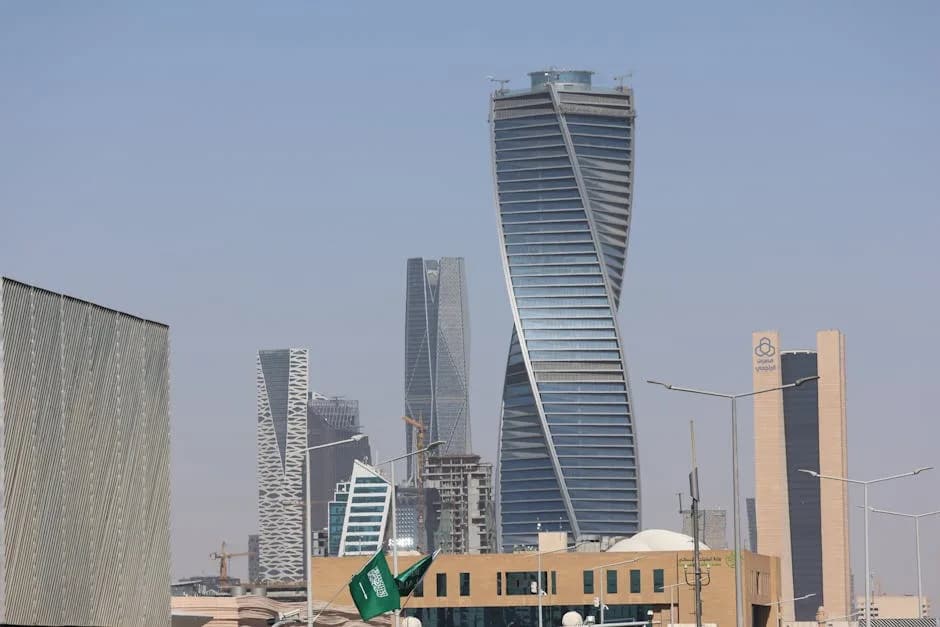
The Kingdom of Saudi Arabia is the largest country in the Middle East and the 12th largest in the world. It occupies most of the Arabian Peninsula, bordered by the Red Sea to the west, the Persian Gulf to the east, and seven countries including Jordan, Iraq, Kuwait, UAE, Qatar, Bahrain (via causeway), and Yemen. Saudi Arabia is home to Islam's two holiest cities - Makkah and Madinah - making it the spiritual center for nearly 2 billion Muslims worldwide.
With a population of approximately 32.2 million (2025), about 38% are foreign nationals - one of the highest expatriate proportions globally. The country holds the world's second-largest proven oil reserves (267 billion barrels) and is the world's largest oil exporter. Its sovereign wealth fund (PIF) manages over $930 billion in assets, making it one of the world's most powerful investment vehicles.
Vision 2030 is inseparable from the leadership that created and drives it. King Salman bin Abdulaziz approved the plan and chairs the Council of Ministers, while Crown Prince Mohammed bin Salman is its primary architect and the force behind its daily execution. Understanding Saudi Arabia's transformation requires understanding its leadership.
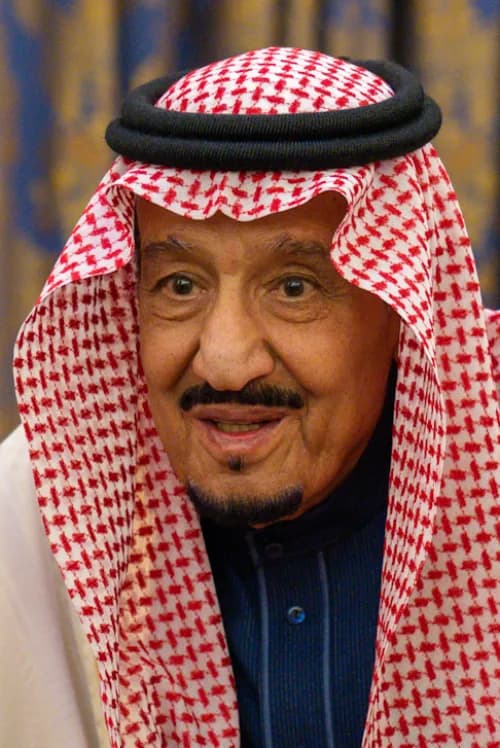
Custodian of the Two Holy Mosques
King of Saudi Arabia since January 2015
Born in 1935, King Salman is the seventh king of Saudi Arabia and one of the last surviving sons of the kingdom's founder, King Abdulaziz. Before ascending to the throne, he served as Governor of Riyadh Province for 48 years (1963-2011), personally overseeing its transformation from a small desert town of 200,000 to a modern metropolis of 7+ million.
As king, Salman restructured the government, created new councils for economic and security affairs, and most significantly, appointed his son Mohammed bin Salman as Crown Prince with unprecedented authority to modernize the kingdom. He approved Vision 2030 in April 2016 and chairs the Council of Ministers that oversees its implementation.
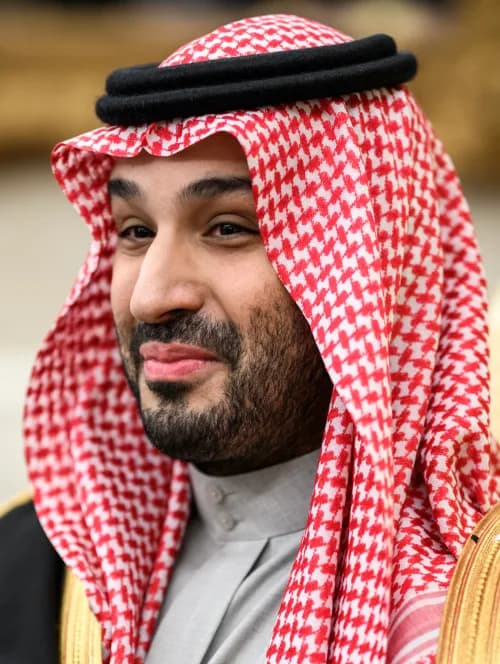
Prime Minister of Saudi Arabia
Architect of Vision 2030
Known widely as "MBS," Mohammed bin Salman (born 1985) is the driving force behind Saudi Arabia's transformation. Appointed Crown Prince in 2017 and Prime Minister in 2022, he chairs the Council of Economic and Development Affairs (CEDA), the Public Investment Fund (PIF), and NEOM's board.
Under his leadership, Saudi Arabia lifted the ban on women driving, opened cinemas after 30 years, introduced tourist visas, launched the entertainment industry, and committed $7 trillion in investment to diversify the economy. He is both praised for modernizing the kingdom at extraordinary speed and scrutinized for his consolidation of power. His vision has made Saudi Arabia one of the world's most-discussed countries.
The PIF is Vision 2030's financial engine. Chaired by MBS, it manages over $930 billion in assets(2025), making it the world's 5th largest sovereign wealth fund. It owns stakes in Uber, Lucid Motors, Nintendo, Starbucks, and dozens of other global companies. Domestically, it funds NEOM, Qiddiya, Red Sea, and virtually all giga-projects. The PIF's target is $2 trillion in assets by 2030.
Vision 2030 is Saudi Arabia's national transformation plan, launched in April 2016 by Crown Prince Mohammed bin Salman. The central idea is simple: transform Saudi Arabia from a country that earns 90% of its revenue from oil into a diversified economy built on tourism, technology, entertainment, financial services, and manufacturing. In a single decade, the Kingdom aims to reinvent itself as a global hub for business, culture, and innovation.
The plan rests on three pillars: a vibrant society (social reforms, entertainment, sports, cultural heritage), a thriving economy (diversification, job creation, privatization, foreign investment), and an ambitious nation (efficient government, fiscal responsibility, infrastructure). The investment is staggering: nearly $7 trillion in combined public and private spending through 2030.
The results so far are a mix of extraordinary achievements and pragmatic recalibrations. Some targets have been exceeded years ahead of schedule (tourism, entertainment, female workforce participation). Others have been quietly revised downward (NEOM population, certain industrial targets). What is undeniable is that daily life in Saudi Arabia has changed beyond recognition since 2016: cinemas, concerts, mixed-gender events, international tourism, professional sports, and a thriving restaurant and cafe culture that simply did not exist before.
As of the 2025 Annual Report, 93% of Vision 2030 KPIs have been met or exceeded. Here are the numbers that define the transformation:
Other milestones: female labor force participation rose from 19.4% to over 35%. SMEs doubled since 2016. Non-oil GDP grew 4.9% in 2025. The Tadawul stock exchange fully opened to foreign investors in February 2026.
The economic transformation is the core of Vision 2030. Saudi Arabia has moved from an economy where oil accounted for nearly all government revenue to one where non-oil sectors generate more than three-quarters of GDP. This is not a cosmetic change: entirely new industries have been built from scratch.
The technology sector has emerged as a strategic priority, with ICT now accounting for 15.6% of GDP. The pivot away from physical mega-construction toward AI and data infrastructure is visible: NEOM's $5B DataVolt partnership for data centers, massive cloud computing investments, and aggressive recruitment of international tech talent. Saudi Arabia aims to become a regional AI hub.
Tourism has been the biggest overachiever. The target of 100 million visitors by 2030 was surpassed in 2025 with 122 million. The $80 e-visa for 49 countries (introduced 2019) removed the biggest barrier to entry. Red Sea resorts, AlUla heritage tourism, Riyadh Season festivals, and religious tourism (Hajj and Umrah) all contribute.
Financial services grew 6.1% in 2025. The full opening of the Tadawul to foreign investors in February 2026 signals Saudi Arabia's ambition to become a Middle Eastern financial center rivaling Dubai. Riyadh's new financial district (KAFD) is now the required headquarters location for international companies operating in the region.
Renewable energy targets 50% of electricity from renewables by 2030. Major solar and wind projects are under construction across the country, and green hydrogen production (the Oxagon facility near NEOM) represents a bet on becoming a global clean energy exporter.
15.6% of GDP. Data centers, cybersecurity, cloud. Strategic pivot from construction.
122M visitors (2025). Red Sea resorts, AlUla, Riyadh Season, religious tourism.
6.1% growth. Tadawul opened to foreigners. KAFD as regional HQ hub.
50% target by 2030. Solar, wind, green hydrogen. Major export ambition.
$64B invested. 100,000+ jobs. Cinemas, concerts, festivals, theme parks.
Industrial diversification, defense manufacturing, logistics hub ambitions.
Vision 2030's most visible element is the mega-projects: futuristic cities, luxury resorts, entertainment complexes, and heritage sites. Nearly $89 billion in contracts were awarded across five giga-projects by September 2025. Some are delivering on schedule, others have been dramatically recalibrated to match economic reality.
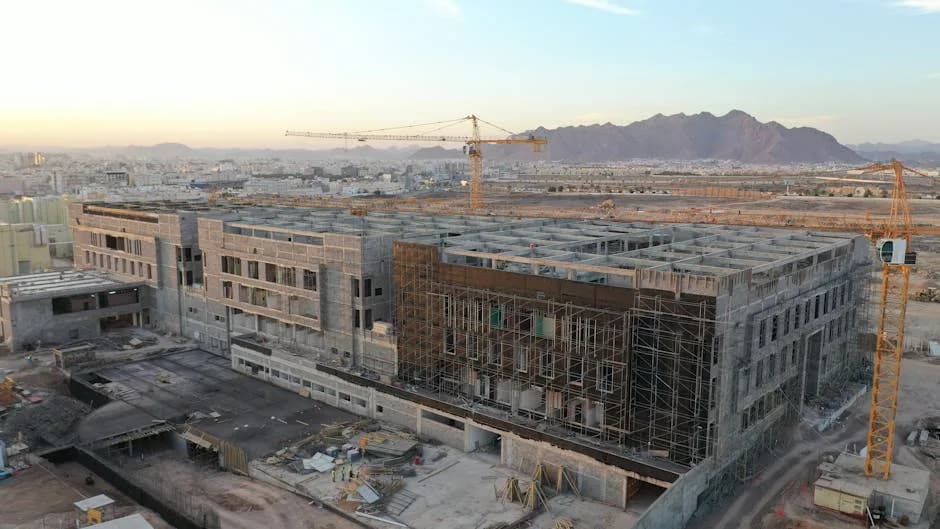
The most ambitious and controversial project. The Line was planned as a 106-mile (170 km) linear city for 1.5 million residents with no cars, no streets, and no carbon emissions. Reality check: construction was suspended in September 2025 after only 1.5 miles (2.4 km) of foundation was completed (1.4%). The workforce was cut by ~35% and relocated to Riyadh. The population target was revised to fewer than 300,000. The project has pivoted toward practical elements: the Oxagon green hydrogen plant (80% complete) and a $5B AI data center partnership with DataVolt. The Trojena ski resort and major tunneling contracts were cancelled in March 2026.
Saudi Arabia's entertainment mega-city, located 25 miles (40 km) from Riyadh. Six Flags Qiddiya City opened December 31, 2025 - the first Six Flags outside North America since 2004. A $1.4B Performance Arts Centre contract was awarded August 2025. More theme parks, a motorsport track, water parks, and a golf course are in various stages of completion. This project is delivering tangibly and represents the entertainment transformation in physical form.
A luxury tourism destination on Saudi Arabia's northwestern Red Sea coast, spanning 10,811 square miles (28,000 km²) with 90+ islands. Phase 1 opened in 2023 with multiple hotels operational. Sindalah island ($4B invested) is expected to open to paying guests in 2026. One of the first giga-projects to deliver on promises. Targets high-end international tourists with eco-luxury resorts, diving, and marine experiences.
A cultural and heritage development at the birthplace of the Saudi state, 15 minutes from central Riyadh. Bujairi Terrace (dining and retail) opened in 2022 and became one of Riyadh's most popular destinations. A $1.5B Arena Block contract (Phase 2) was awarded June 2025 for a multi-purpose indoor arena and mixed-use offices. The project blends Saudi heritage architecture with modern amenities.
Riyadh's new financial and business center. Largely complete with modern office towers, residential apartments, metro access, restaurants, and retail. This is where the government requires international companies with regional operations to place their headquarters. Major consulting firms, banks, and tech companies have relocated here. Not the flashiest project, but arguably the most economically impactful: it has turned Riyadh into a genuine regional business hub.
A critical element of Vision 2030 is creating jobs for Saudi nationals. The Saudization program (officially Nitaqat) requires private companies to employ minimum percentages of Saudi workers. This has been one of the most controversial aspects of the plan, as it directly displaces foreign workers in many sectors.
The system uses a color-coded band: companies are rated Platinum, Green (High/Mid/Low), Yellow, or Red based on their percentage of Saudi employees. Companies that fail to meet quotas face blocked government services, inability to renew foreign work permits, and disqualification from tenders. Between 2026 and 2028, the Ministry of Human Resources plans to localize 340,000+ additional private sector jobs.
Saudi unemployment has dropped to 6.3% (from much higher levels), and female unemployment fell from 15.9% to 11.3% between 2023 and 2025. The program is succeeding in its goals. However, it creates tension: many sectors still lack sufficient trained Saudi professionals, and companies in Yellow/Red bands struggle to operate while trying to hire locally.
| Sector | Saudi Quota Required | Effective |
|---|---|---|
| Retail | 70%+ | Active |
| Banking (front office) | 70%+ | Active |
| Procurement | 70% | 2025 |
| Hospitals | 65% | July 2025 |
| Marketing | 60% | 2025 |
| Dentistry | 45% → 55% | July 2025 / Jan 2026 |
| Accounting | 40% → 70% (phased) | Oct 2025 onwards |
| Engineering (5+ staff) | 30% | July 2025 |
Vision 2030 is entering its final phase, but Saudi Arabia has already secured commitments that extend the transformation well beyond 2030. Two of the world's biggest events will drive infrastructure investment for the next decade:
The first World Expo in the Middle East outside the UAE. Expected to bring millions of international visitors and require massive exhibition infrastructure, transport upgrades, and hospitality capacity. A showcase for Saudi Arabia's transformed image.
The largest sporting event ever hosted in the region. Will require new stadiums, metro extensions, road networks, hotels, and tourism infrastructure across multiple cities. Expected to be the single largest infrastructure investment cycle in Saudi history.
| 2026 | Sindalah island opens (Red Sea). Qiddiya Phase 2 attractions. Tadawul fully open to foreign investors. |
| 2027-28 | Saudization expansion (340,000+ jobs localized). $64B entertainment investment fully deployed. |
| 2030 | Expo 2030 Riyadh. 50% renewable energy target. Vision 2030 conclusion/evaluation. |
| 2034 | FIFA World Cup. New stadiums, transport, and hotels across Saudi Arabia. |
| 2060 | Net-zero carbon emissions target. |
Vision 2030 is Saudi Arabia's national transformation plan launched in April 2016 by Crown Prince Mohammed bin Salman. Its goal is to reduce the country's dependence on oil revenue by developing tourism, entertainment, technology, financial services, and manufacturing sectors. The plan has three pillars: a vibrant society, a thriving economy, and an ambitious nation.
Largely yes. As of 2025, 93% of Key Performance Indicators have been met or exceeded. Non-oil GDP accounts for 76% of total output (up from ~50%). Tourism reached 122 million visitors in 2025, surpassing the 2030 target 7 years early. However, some mega-projects (notably NEOM/The Line) have been significantly scaled back, and certain targets have been revised downward.
Construction on The Line was suspended in September 2025. Only 1.5 miles (2.4 km) of foundation was completed (1.4% of the planned 106 miles / 170 km). The workforce was cut by ~35%. The project has pivoted toward green hydrogen production and AI data centers. The population target was revised from 1.5 million to fewer than 300,000 by 2030. Other NEOM elements (Oxagon industrial city) continue in reduced form.
Several are operational: Red Sea Project Phase 1 opened 2023 with hotels running. Six Flags Qiddiya City opened December 2025. Diriyah Gate's Bujairi Terrace opened 2022. KAFD (King Abdullah Financial District) in Riyadh is largely complete. The projects delivering tend to be smaller-scale tourism and entertainment venues rather than the massive futuristic cities.
Non-oil GDP grew from roughly 50% to 76% of total output. Non-oil revenue increased 113%. FDI stock reached $280 billion. Overall unemployment hit a historic low of 2.8%. The ICT sector now accounts for 15.6% of GDP. SMEs doubled since 2016. Home ownership rose from 47% to over 60%. The entertainment sector created 100,000+ jobs from zero.
Women can now drive (ban lifted 2018), the guardianship system was relaxed, cinemas reopened after 30 years, concerts and mixed-gender events are now regular, tourism visas were introduced for 49 countries, restaurants removed gender segregation, female workforce participation rose from 19.4% to over 35%, and entertainment licenses exceeded 11,400.
Saudization is a government program requiring private companies to employ minimum percentages of Saudi nationals. It uses a color-coded band system (Platinum to Red). Companies failing to meet quotas face blocked services and inability to renew foreign work permits. The program is expanding: 340,000+ additional jobs will be localized between 2026-2028. Retail, banking, accounting, and marketing are most affected.
Saudi Arabia will host Expo 2030 in Riyadh and the FIFA 2034 World Cup. It already hosts Formula 1 (Jeddah), Formula E, LIV Golf, WWE events, major boxing fights, and the annual Riyadh Season mega-festival. The Red Sea International Film Festival showcases 138 films from 67 countries annually.
Vision 2030 has repositioned Saudi Arabia from a quiet oil exporter to a globally assertive nation. The Kingdom is now actively competing for international events, corporate headquarters, and cultural influence. This represents a fundamental shift in how Saudi Arabia engages with the world.
The HQ relocation mandate (2024) requires foreign companies with government contracts to establish their Middle East regional headquarters in Riyadh. This has already brought hundreds of multinational corporations to the city, including consulting firms (McKinsey, BCG, Bain), banks (Goldman Sachs, JPMorgan), and tech companies. The effect is transforming Riyadh into a genuine rival to Dubai as the region's business center.
Social Reforms and Entertainment Revolution
The social transformation under Vision 2030 may be the most dramatic change in Saudi Arabia's modern history. Before 2018, there were no cinemas, no concerts, no mixed-gender public events, and women could not drive. Today, Saudi Arabia hosts Formula 1 races, international music festivals, and theme parks. The speed of change has been extraordinary.
The General Entertainment Authority has invested $64 billion in the sector through 2028 and issued over 11,400 entertainment licenses. More than 100,000 jobs have been created in an industry that literally did not exist before 2018. Riyadh Season, launched in 2019, has become one of the world's largest annual entertainment festivals, drawing millions of visitors.
Entertainment Milestones
Social Reforms
Context: While Saudi Arabia has liberalized dramatically, it remains conservative by Western standards. Alcohol is fully prohibited. The legal system is based on Sharia law. Modest dress is expected in public. The changes are real and transformative, but Saudi Arabia is not aiming to replicate a Western social model - it is creating its own modern identity rooted in Islamic and Saudi cultural values.