Loading...
Join our Facebook Group: Join: Expats in Saudi Arabia
Loading...
Renting in Saudi Arabia works differently from most Western countries. Annual upfront payments, mandatory government registration through Ejar, compound living, and a market that ranges from basic apartments to luxury villas - there's a lot to navigate. This guide covers everything an expat needs to know to find, rent, and settle into a home in the Kingdom.
The Saudi rental market is booming. Vision 2030 has brought hundreds of thousands of foreign workers into the country, and cities like Riyadh, Jeddah, and the Eastern Province are seeing intense demand for quality housing. For expats, the market offers everything from basic studio apartments to luxury villas and gated compounds with resort-style amenities - but navigating it requires understanding how the Saudi system works, because it's quite different from what you might be used to.
The biggest difference is how rent is paid. In most Western countries, you pay monthly. In Saudi Arabia, annual payment is the norm. Many landlords expect the full year's rent upfront, though this is gradually changing - an increasing number now accept 2-4 installments via post-dated cheques or SADAD payments. This means you need significantly more cash upfront to get started, so budget accordingly. If you're moving to Saudi for work, check whether your employer offers a housing allowance, advance, or company-provided accommodation, because most major employers do.
The other major difference is Ejar - the government's mandatory rental registration platform. Every residential lease in Saudi Arabia must be registered on Ejar, which creates a legally binding digital contract. This is actually a good thing for tenants: it standardizes lease terms, provides legal protection, and creates a clear record of the agreement. If your landlord refuses to register on Ejar, that's a red flag - you lose legal protection and it can cause problems with other government services like updating your Absher address.
Rental prices have risen significantly since 2022, particularly in Riyadh, which has become one of the most expensive cities in the Gulf for housing. Jeddah is slightly more affordable, and the Eastern Province (Dammam, Khobar, Dhahran) offers better value with a high quality of life. Smaller cities like Abha, Taif, and Yanbu are considerably cheaper but have fewer expat-oriented options.
Saudi Arabia offers several distinct housing types, and the right choice depends on your family situation, budget, and lifestyle preferences. Understanding the differences is important because they affect not just your rent but your entire daily experience.
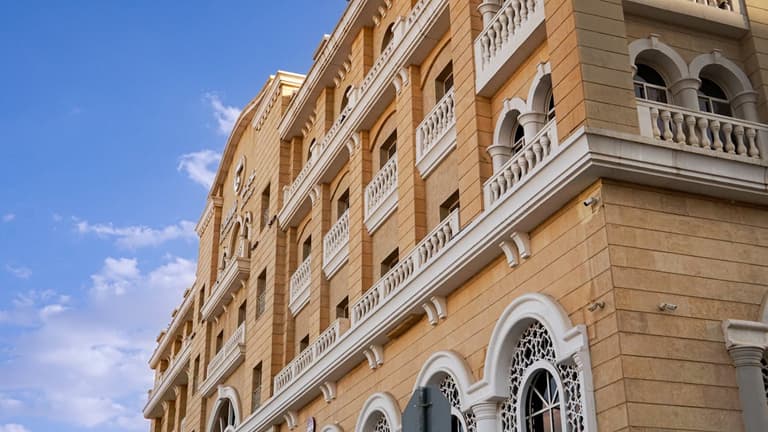
Apartments are the most common rental option for single expats and couples. They range from basic studios in older buildings to modern units in high-rise towers with gyms, pools, and parking. In Riyadh and Jeddah, newer developments offer Western-standard finishes with central AC, fitted kitchens, and built-in wardrobes. Older buildings are significantly cheaper but may lack these features. Apartments are typically rented unfurnished, though furnished options exist at a premium of 30-50% more.
Typical costs: Studio apartments start around 15,000-25,000 SAR/year in major cities. A decent 2-bedroom apartment in a good neighborhood runs 30,000-60,000 SAR/year in Riyadh, slightly less in Jeddah and the Eastern Province. High-end apartments in prime areas like Riyadh's Olaya district or Jeddah's Corniche can reach 80,000-120,000 SAR/year.
Villas are standalone houses, usually with a private garden, parking, and sometimes a private pool. They're the preferred choice for families who want space and privacy. Saudi villas tend to be larger than what expats are used to - a typical 3-bedroom villa might be 300-500 square meters. They come in all conditions: from modern, architect-designed homes to older properties that need work. Most villas are unfurnished, and you'll need to budget for furniture, appliances, and potentially some renovation or cleaning when you move in.
Typical costs: Villas start around 40,000-70,000 SAR/year for a basic 3-bedroom in a mid-range area. Modern villas in desirable neighborhoods run 80,000-150,000 SAR/year. Luxury villas in premium areas like Riyadh's Al Nakheel or Jeddah's Obhur can exceed 200,000 SAR/year.
Compounds are gated residential communities - essentially small neighborhoods enclosed behind walls with shared amenities. They typically include swimming pools, gyms, tennis courts, playgrounds, community centers, and sometimes shops, restaurants, and medical clinics. Security is tight, with manned gates and ID checks. Inside the compound, the atmosphere is more relaxed than outside, with families socializing in shared spaces and a strong sense of community.
Compounds are particularly popular with Western expats, especially families with children. They offer a smoother transition to life in Saudi Arabia, ready-made social networks, and a level of comfort that's hard to replicate in standalone housing. The tradeoff is cost: compound living is significantly more expensive, and you're somewhat isolated from the broader Saudi community. Many employers provide compound housing as part of the employment package, particularly for senior staff.
Typical costs: Compound villas range from 80,000-250,000+ SAR/year depending on the compound's reputation, amenities, and location. The most prestigious compounds in Riyadh (like Al Nakhla, Arizona Compound, or Cordoba) can exceed 300,000 SAR/year. This usually includes maintenance, security, and access to all amenities.
For short-term stays or while you search for permanent housing, serviced apartments are a practical option. These come fully furnished with utilities, internet, and regular housekeeping included. Rates are higher per month than regular apartments, but there's no upfront annual payment and no commitment. They're available in all major cities and can be booked through hotel chains (like Marriott Executive Apartments or Fraser Suites) or local operators. Many expats use serviced apartments for their first 1-2 months while they find and set up permanent housing.
Finding a rental in Saudi Arabia requires using multiple channels. No single platform has everything, and the best deals often come through personal connections. Here are the main search channels, roughly in order of usefulness for expats:
Top rental platforms in Saudi Arabia:
Bayut.sa is the largest real estate portal in Saudi Arabia and should be your starting point. It has tens of thousands of listings with photos, prices, maps, and agent contact details. The search filters are good - you can filter by city, neighborhood, property type, price range, and number of bedrooms. Most listings are from agents, so expect professional (if sometimes optimistic) descriptions and photos. The site is available in English and Arabic.
Aqar.fm is another major platform, more popular with Saudi landlords posting directly. Listings tend to be less polished than Bayut but the selection is vast and you'll find properties that don't appear on other platforms. The interface is primarily Arabic, though basic navigation is possible in English. This is where you're more likely to find deals from individual landlords rather than agents.
Property Finder is a well-known portal across the Gulf. The Saudi version has a polished, English-friendly interface with detailed property information and neighborhood guides. It's particularly good for compound listings and higher-end properties. Wasalt is a newer Saudi platform that emphasizes verified listings and video tours - worth checking for a more curated selection.
Haraj.com.sa is Saudi Arabia's largest classifieds site (similar to Craigslist). It has a rental section with direct-from-owner listings. The platform is entirely in Arabic, so you'll need help navigating if you don't read Arabic. Prices tend to be lower because there's no agent commission built in. Facebook groups like "Expats in Riyadh", "Jeddah Expats", and "Saudi Arabia Property" are additional channels worth monitoring - members regularly post available rentals and share honest reviews of agents and landlords.
Working with an agent is strongly recommended for expats, especially on your first rental. A good agent handles the language barrier, knows which neighborhoods suit expat families, can negotiate with landlords, and guides you through the Ejar registration process. The standard agent commission is 2.5% of the annual rent (paid by the tenant), though this is sometimes negotiable. Some landlords pay the commission instead, particularly for higher-end properties and compounds.
Look for agents who specifically serve the expat community - they understand compound preferences, proximity to international schools, and the specific requirements of foreign tenants. Your employer's HR department often has recommended agents, and word-of-mouth from colleagues is the most reliable way to find a trustworthy agent. Major international real estate firms like CBRE, JLL, and Engel & Volkers operate in Saudi Arabia and cater to the expat market.
Don't underestimate this channel. Many large employers in Saudi Arabia either provide housing directly, have partnerships with compounds, or maintain lists of recommended properties and agents. Your colleagues - especially those who've been in the country for a while - know which neighborhoods work for expats, which landlords are reliable, and where the hidden gems are. Expat social groups on Facebook and WhatsApp are also valuable sources of leads, recommendations, and honest warnings about properties and areas to avoid.
Watch out for scams: Never transfer money without seeing the property in person and verifying the landlord's identity. Always insist on an Ejar-registered contract. Be wary of prices that seem too good to be true, agents who pressure you to pay before viewing, or landlords who refuse to register on Ejar. If something feels off, walk away - there are plenty of legitimate options.
Get matched with an English-speaking real estate agent who specializes in helping foreigners find compounds, villas, and apartments in Saudi Arabia.
Expat-friendly agents
Agents experienced with expat clients who understand compound living, Iqama requirements, and tenancy contracts
English-speaking
No language barrier - viewings, contracts, and negotiations all in English
Contract protection
Help reviewing rental or purchase contracts registered on the Ejar platform to protect your interests
Free matching
No cost to you - we connect you with the right agent who knows the local market
Once you've found a property you like, here's how the rental process works in Saudi Arabia. It's more formal than in many Western countries because of the mandatory Ejar registration, but this formality actually works in your favor as a tenant.
Visit the property in person - photos can be misleading, especially for older buildings. Check the AC (essential in Saudi Arabia), water pressure, electrical outlets, kitchen condition, and whether the building has reliable elevator service and parking. Ask about internet availability in the building (fiber optic coverage varies by area). If you like the property, negotiate the price. Despite what landlords say, rent is almost always negotiable, especially if you're willing to pay the full year upfront or sign a longer lease. A 5-10% discount on the asking price is common.
Before signing anything, agree on all the key terms: annual rent, payment schedule (1, 2, 3, or 4 installments), lease duration (usually 1 year, renewable), what's included (AC maintenance, water, parking), who pays for repairs, and the notice period for non-renewal (usually 60-90 days before lease end). If the property is unfurnished, clarify whether the landlord will fix or replace anything before you move in. Get all agreements in writing - verbal promises are unenforceable.
You'll need your Iqama, passport copy, employment letter, and bank statement or salary certificate. The landlord (or their agent) registers the lease on the Ejar platform (ejar.sa). Both parties need to approve the contract through Ejar - you'll receive an SMS or notification to review and accept the terms. The Ejar contract specifies the rent amount, payment dates, lease period, and both parties' obligations. Once both sides approve, it becomes a legally binding contract enforceable through the courts.
Insist on Ejar registration. Without it, you have very limited legal recourse if something goes wrong, and you won't be able to update your address on Absher - which is required for many government services and banking.
Pay the agreed rent (typically one full year or the first installment). Payment is usually made by bank transfer or cheque. Get a receipt for every payment. If you're paying in installments, post-dated cheques are the standard method - you write cheques dated for each installment and the landlord deposits them on the due dates. Some modern landlords accept SADAD payments or even direct bank transfers on a schedule.
Before moving in, do a thorough inspection and document everything. Take photos and videos of the entire property, noting any existing damage, marks, or issues. This protects your deposit when you leave. Check that all AC units work, all lights function, taps don't leak, and appliances (if furnished) are in working order. Agree with the landlord on the condition report - ideally in writing - so there's no dispute when you move out.
After moving in: Update your national address on Absher immediately using your Ejar contract number. Your bank, SIM card provider, and other services are linked to your registered address. Also set up electricity (Saudi Electricity Company app), water (National Water Company), and internet (STC, Mobily, or Zain fiber) as soon as possible.
Rental prices vary enormously between cities and even between neighborhoods within the same city. Here's a realistic overview of what to expect. All figures are annual rent in SAR, which is how rent is quoted in Saudi Arabia.
The capital is the most expensive city for housing, and prices have surged since 2022 as the government relocates regional headquarters of international companies to Riyadh. A 2-bedroom apartment in a good area (Olaya, Malqa, Hittin) runs 35,000-70,000 SAR/year. A 3-bedroom villa in a family-friendly neighborhood starts at 70,000-120,000 SAR/year. Compound villas in established communities range from 120,000-300,000+ SAR/year. The north of Riyadh (Al Nakheel, Aqeeq, Malqa) is the most desirable area for expats, with proximity to international schools and modern infrastructure.
Jeddah is 10-20% cheaper than Riyadh for similar properties. The city's appeal lies in its Red Sea coastline, more relaxed culture, and proximity to Mecca. A 2-bedroom apartment in areas like Al Rawdah, Al Zahra, or Obhur costs 25,000-55,000 SAR/year. Villas run 60,000-120,000 SAR/year depending on size and location. The Corniche area and north Jeddah (toward Obhur and KAEC) are popular with expats.
The Eastern Province offers the best value for money among major expat destinations. The Khobar-Dhahran area is particularly popular with expats working for Aramco and the petrochemical industry. A 2-bedroom apartment costs 20,000-40,000 SAR/year, and villas range from 50,000-100,000 SAR/year. Compound options are plentiful, especially around Dhahran and Al Khobar, with prices from 80,000-180,000 SAR/year. The quality of life is high, with excellent beaches, parks, and a strong expat community.
Smaller cities like Abha, Taif, Jubail, and Yanbu are significantly cheaper - often 30-50% less than Riyadh for comparable properties. These cities have smaller expat communities and fewer English-language services, but the lower cost of living and quieter pace of life appeal to many. Industrial cities like Jubail and Yanbu often have employer-provided compound housing for major industry workers.
Note: Rental prices are annual (SAR/year) and represent typical ranges for decent-quality properties in expat-friendly neighborhoods. Prices change frequently - verify current rates on Bayut.sa or Aqar.fm. Furnished properties cost 30-50% more than unfurnished equivalents.
Saudi landlords and the Ejar platform require specific documentation to process a lease. Having these ready in advance speeds up the process significantly - good properties go fast, and being able to sign quickly can be the difference between getting the place and losing it.
The essentials are your Iqama (residence permit) - this is your primary ID for everything in Saudi Arabia, including Ejar registration. You'll also need a passport copy, an employment letter or contract confirming your job and salary, and a recent bank statement or salary certificate showing you can afford the rent. Some landlords want to see 3 months of bank statements. For compound living, your employer may need to provide a corporate guarantee letter confirming they'll cover the rent if you leave.
You'll also need a registered national address on Absher. This creates a chicken-and-egg problem for newcomers: you need an address to register on Absher, but you need Absher to rent. The workaround is to use your employer's address or a temporary address (hotel or serviced apartment) initially, then update it after signing your lease. Your employer's PRO can help set this up.
Tip: Keep digital copies of all documents on your phone. Landlords and agents often ask for documents at short notice - being able to email or WhatsApp them immediately shows you're serious and speeds up the process. Also keep your Ejar contract number handy; you'll need it for Absher address updates and various government services.
Saudi rental law has improved significantly in recent years, particularly with the introduction of the Ejar platform. As a tenant with an Ejar-registered contract, you have legally enforceable rights that protect you from the most common landlord abuses.
Your landlord cannot evict you without cause during the lease period. Valid reasons for eviction are limited to: non-payment of rent (after a 15-day written notice), illegal use of the property, subletting without written permission, or causing significant structural damage. Your landlord also cannot raise the rent during the lease period - the amount is fixed in the Ejar contract. At renewal time, any proposed increase must be agreed by both parties; you can refuse and the existing terms continue until the lease expires.
The landlord is responsible for major repairs and structural maintenance - the roof, external walls, plumbing infrastructure, and AC system (unless the contract specifies otherwise). You're responsible for minor maintenance and keeping the property in good condition. If your landlord refuses to make necessary repairs, you can file a complaint through the Ejar platform or the Rental Dispute Committee.
The Rental Dispute Committee (part of the Ministry of Housing) handles conflicts between tenants and landlords. If you have a dispute - unpaid repairs, security deposit not returned, lease violations - you can file a case online. Having an Ejar-registered contract makes these cases much simpler because the terms are already documented. Cases are typically resolved within a few weeks.
If your lease isn't on Ejar: You lose most of these protections. Without Ejar registration, disputes become he-said-she-said situations with limited legal recourse. Always insist on Ejar registration, even if the landlord claims it's unnecessary or offers a discount for skipping it. The legal protection is worth far more than any discount.
After helping thousands of expats navigate Saudi housing, here are the things that make the biggest difference:
Budget for upfront costs. You'll typically need 12-14 months' rent available immediately: one full year's rent (or first installment), plus an agent commission (2.5%), plus a security deposit (usually 1-2 months). If your employer provides a housing allowance, confirm whether it's paid as a lump sum at the start or monthly. If monthly, you may need a bridge loan or advance to cover the initial payment.
Visit the property at different times of day. A quiet neighborhood at 10am might be gridlocked at 5pm. Check the commute to your workplace during actual rush hour. In Saudi Arabia, evening noise can also be an issue - many neighborhoods are lively late into the night, especially on weekends (Thursday-Friday).
Check the AC before signing. Air conditioning isn't optional in Saudi Arabia - temperatures exceed 45°C in summer. Test every AC unit in the property and ask about the age and maintenance history of the system. A poorly maintained AC can lead to astronomical electricity bills (easily 1,000+ SAR/month in summer for a villa) and uncomfortable living conditions. Central AC is better than split units for consistent cooling.
Understand electricity costs. Saudi electricity is heavily subsidized but still adds up, especially for villas with large AC systems. Check the Saudi Electricity Company (SEC) tariff - you can estimate costs using our energy cost calculator. Ask the landlord or previous tenant about typical monthly bills. In summer, villa electricity bills of 1,500-3,000 SAR/month are normal.
Consider proximity to schools. If you have children, international school locations should heavily influence your housing search. Riyadh's international schools are concentrated in the north (near DQ, BISR, AIS), while Jeddah's are spread across the north and central areas. Commute times matter because Saudi traffic can be unpredictable, and school bus routes may not cover all neighborhoods.
Network before you arrive. Join Facebook groups like "Expats in Riyadh," "Jeddah Expats," or "Eastern Province Expats" before your move. Ask for neighborhood recommendations, agent referrals, and honest opinions about specific properties or compounds. The expat community in Saudi Arabia is helpful and active online, and firsthand recommendations are invaluable.
Yes. Anyone with a valid Iqama (residence permit) can rent property in Saudi Arabia. You don't need Saudi citizenship or Premium Residency to rent. Your lease contract must be registered on the Ejar platform, and you'll need your Iqama number, a national address registered through Absher, and proof of employment or income.
Rental costs vary hugely by city and property type. In Riyadh, expect 20,000-50,000 SAR/year for a decent apartment and 60,000-150,000+ SAR/year for a villa. Jeddah is slightly cheaper. Dammam and Khobar offer better value. Compound living ranges from 80,000-250,000+ SAR/year depending on amenities. Rent is typically paid annually upfront or in 2-4 installments.
Ejar is the Saudi government's mandatory rental registration platform run by the Ministry of Housing. All residential and commercial leases must be registered on Ejar. It creates a legally binding digital contract, protects both tenant and landlord rights, and is required for many government services like updating your address on Absher.
The Saudi norm is annual payment, often in 1-2 large payments at the beginning of the lease. However, this is changing - many landlords now accept 2, 3, or 4 installments per year via post-dated cheques or SADAD payments. Monthly payment is uncommon for residential leases but becoming more available through newer platforms.
You'll need your Iqama (residence permit), passport copy, employment letter or contract, recent bank statement or salary certificate, and a registered national address on Absher. Some landlords also ask for a reference from your employer or a letter confirming your salary. For compound living, your employer may need to guarantee the lease.
Compounds are gated residential communities with shared amenities like pools, gyms, playgrounds, and sometimes schools and shops. They're popular with Western expats because of the community feel, security, and relaxed social norms within the compound. They're more expensive than standalone apartments but offer a smoother transition for families new to Saudi Arabia.
Saudi rental law protects tenants from arbitrary eviction. A landlord can only terminate a lease for specific reasons: non-payment of rent (after a 15-day notice), illegal use of the property, subletting without permission, or causing significant damage. If the lease is registered on Ejar, you have strong legal protection. Disputes are handled by the Rental Dispute Committee.
It depends on your situation. If you're on a short contract (1-2 years), furnished makes more sense financially since buying and then selling furniture is a hassle. For longer stays, unfurnished is cheaper long-term and lets you set up your home the way you want. Furnished apartments typically cost 30-50% more in monthly rent.
Setting up a home is just one part of the picture. These guides cover the other essentials: