Loading...
Join our Facebook Group: Join: Expats in Saudi Arabia
Loading...
A complete guide to Eid al-Fitr and Eid al-Adha in Saudi Arabia. Dates, traditions, what to expect, and practical tips for expats and visitors.
By How to Saudi Arabia Editorial Team · Last updated:
The word Eid means "festival" or "celebration" in Arabic, and there are two major Eids in Islam, both of which carry enormous significance in Saudi Arabia as the birthplace of the religion and home to the two holiest mosques in the world.
Eid al-Fitr, or the "Festival of Breaking the Fast," marks the end of Ramadan and serves as a joyful celebration of gratitude, family reunions, and feasting after 30 days of dawn-to-dusk fasting - a reward that feels all the more sweet after a month of spiritual discipline. Eid al-Adha, or the "Festival of Sacrifice," is considered the holier of the two celebrations and coincides with the annual Hajj pilgrimageto Mecca, commemorating Prophet Ibrahim's (Abraham's) willingness to sacrifice his son in obedience to God through a tradition in which families sacrifice an animal, usually a sheep or goat, and distribute the meat among family, friends, and the poor.
In Saudi Arabia, Eid goes far beyond a religious holiday and functions as the biggest cultural event of the year, when the entire country shifts into celebration mode as government offices close for days, families gather from across the Kingdom, cities are decorated with lights and crescent moon motifs, and the streets come alive with a festive energy that is hard to match anywhere else in the world. For expats living in Saudi Arabia, experiencing their first Eid is consistently one of the most memorable and rewarding aspects of life in the Kingdom.
Because Eid dates follow the Islamic (Hijri) lunar calendar, which is approximately 11 days shorter than the Gregorian calendar, the holidays shift earlier each year and the exact dates are only confirmed 1-2 days before by the Saudi Supreme Court based on the physical sighting of the crescent moon, meaning you will not have a firm date to plan around until the very last moment.
| Holiday | 2026 (Expected) | 2027 (Expected) | Duration |
|---|---|---|---|
| Eid al-Fitr | ~March 20-22 | ~March 9-11 | 3-4 days (often extended to a week) |
| Eid al-Adha | ~May 27-30 | ~May 16-19 | 4 days (often extended to a week) |
Important:
These dates are estimates based on astronomical calculations. The actual start of Eid can shift by 1-2 days depending on the moon sighting. Don't book non-refundable travel until the official announcement. The Saudi Supreme Court typically confirms the date on the 29th of the preceding Islamic month.
Eid al-Fitr is the celebration that follows Ramadan, and after 30 days of abstaining from food and drink between dawn and sunset, it arrives as a joyful release and a time for eating, celebrating, and giving thanks for the strength to complete the month of fasting.
The last night of Ramadan carries an electric atmosphere across the entire Kingdom, as families stay up late preparing elaborate meals, laying out brand-new clothes for the morning, and putting the finishing touches on home decorations while children are too excited to sleep. Malls and shops are packed with people buying last-minute gifts and outfits, and the anticipation builds until the Saudi Supreme Court announces the moon sighting on television. The moment that announcement is made, the entire country erupts in celebration, with fireworks lighting up the sky in every major city and shouts of "Eid Mubarak!" echoing from every direction.
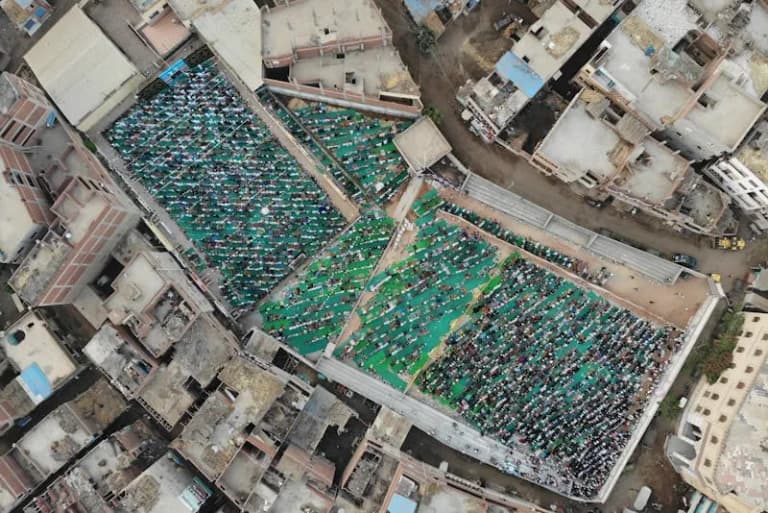
The day begins with Salat al-Eid(Eid prayer), which is performed shortly after sunrise in mosques and open prayer grounds across the country, with millions of worshippers attending in their finest new clothes while the streets leading to major mosques in cities like Riyadh and Jeddah fill with families making their way on foot. After prayers, people embrace one another, exchange greetings of "Eid Mubarak" and "Taqabbal Allahu minna wa minkum" (May God accept from us and from you), and head home to share the first daytime meal the family has eaten together in an entire month.
Before Eid prayers take place, every Muslim is required to pay Zakat al-Fitr, a charitable donation of food or its monetary equivalent of approximately 25-30 SAR per family member, which is intended to ensure that even the poorest members of the community can afford to enjoy the Eid celebration. Many families choose to fulfil this obligation through their local mosque or through convenient digital platforms like the Saudi National Platform for Charitable Work.
Eid al-Adha is considered the holiest celebration in Islam, falling on the 10th of Dhul Hijjah during the annual Hajj pilgrimage, and while millions of pilgrims are completing their sacred rites in Mecca, Muslims around the world mark the occasion with prayers, family gatherings, and the ritual sacrifice that gives the holiday its name.
At the heart of Eid al-Adha is the Udhiyah, the sacrificial slaughter of an animal - typically a sheep, goat, cow, or camel - which commemorates Prophet Ibrahim's willingness to sacrifice his son Ismail in obedience to God. In Saudi Arabia, the government licenses specific slaughterhouses and butchers for the Eid sacrifices to guarantee that halal and hygienic standards are maintained, and many families purchase their animal well in advance from temporary livestock markets that spring up across every city in the days leading up to the holiday. The resulting meat is traditionally divided into three equal parts, with one third kept for the family, one third shared with relatives and friends, and the final third donated to the poor so that everyone in the community can share in the celebration.
What makes Eid al-Adha particularly powerful in Saudi Arabia is its direct, tangible connection to Hajj, because while over 2 million pilgrims perform the rites in Mecca - standing in prayer on Mount Arafat, camping in the tents of Mina, stoning the Jamarat pillars - the rest of the country watches the coverage on television and celebrates alongside them in real time. Saudi news channels broadcast the Hajj around the clock, the emotional weight of the event is palpable throughout the country, especially in the Hejaz region closest to the holy sites, and even non-Muslim expats are often deeply moved by the sheer scale of devotion on display.
The three days following Eid al-Adha, known as the Days of Tashreeq (the 11th, 12th, and 13th of Dhul Hijjah), are considered an extension of the celebration during which fasting is prohibited and the feasting, family visits, and socializing continue at full pace, with most workplaces remaining closed throughout the entire period.
Saudi Arabia has developed its own distinct set of Eid traditions that vary from region to region, and understanding them will help you feel more connected to the celebration whether you are a visitor or a long-term expat.
Wearing brand-new clothes on Eid morning is a deeply rooted tradition, and families - especially children - begin shopping for their outfits weeks in advance, with men and boys typically choosing a crisp new thobe (white robe) and women and girls selecting elegant new dresses or abayas. The pre-Eid shopping frenzy reaches remarkable intensity in the final days before the holiday, with malls staying open until 2 or 3 in the morning and clothing stores offering steep discounts to attract the crowds.
Visiting family is the emotional heart of Eid, and after the morning prayers, families follow a traditional visiting order that begins with the eldest relatives first, typically converging on the grandparents' home where extended families of 30, 50, or even more people gather under one roof to share meals, catch up on news, and exchange gifts across multiple generations. For many Saudi families, Eid represents the only occasion in the entire year when the full extended family manages to be in one place, and these gatherings can last all day and continue for the full three or four days of the holiday.
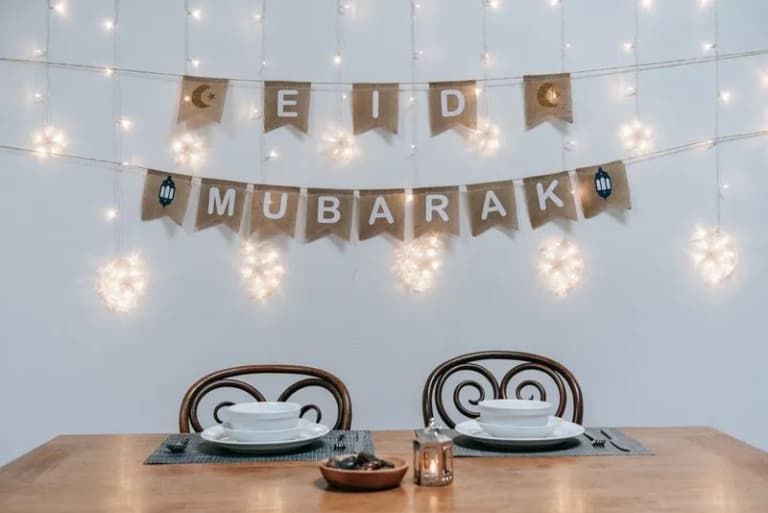
Saudi cities are elaborately decorated for Eid, with streets adorned in lights, banners reading "Eid Mubarak," and themed installations, while malls create impressive displays and homes are decorated with lanterns, garlands, and crescent moon motifs. In recent years the scale of these decorations has grown dramatically, with major cities like Riyadh and Jeddah essentially competing to produce the most spectacular public displays.
In the days leading up to Eid, and especially before Eid al-Adha, the air fills with Takbirat- rhythmic chants of "Allahu Akbar" (God is Greatest) - broadcast from mosque loudspeakers and played in malls, markets, and public spaces throughout the country. For Eid al-Adha the Takbirat begin on the day of Arafat (the 9th of Dhul Hijjah) and continue through the Days of Tashreeq, creating an unmistakable and deeply moving soundscape that permeates every corner of the Kingdom.
Eid traditions take on distinctive local flavours across Saudi Arabia's different regions: in the Hejaz around Jeddah, Mecca, and Medina, the emphasis falls on elaborate communal breakfasts and traditional Hejazi dishes, while the Najd region around Riyadh is known for large family majlis (sitting room) gatherings centered around Arabic coffee and dates. The Eastern Province draws on Gulf influences with more seafood dishes and pearl-themed decorations, and the Asir region around Abha adds its own unique character with traditional folk dances and mountain celebrations set against the cool highland scenery.
Eidiya (also spelled Eydiah or Eidiyah) is the beloved tradition of giving money to children during Eid, and it ranks as one of the absolute highlights for kids and one of the most endearing aspects of Saudi culture for newcomers to witness.
Adults give cash to children, typically placed in small decorated envelopes or simply handed over with an "Eid Mubarak," and children make the rounds from relative to relative and neighbour to neighbour collecting their gifts, with some enterprising kids managing to accumulate a surprisingly significant sum over the course of the holiday. Banks in Saudi Arabia even issue crisp new bills specifically for Eidiya season, and ATMs across the country are stocked with fresh notes in the days before Eid to meet the demand.
| Relationship | Typical Amount (SAR) |
|---|---|
| Your own children | 100-500 |
| Nieces/nephews, close friends' children | 50-200 |
| Colleagues' children, neighbors' kids | 10-50 |
| Building staff, driver's children | 20-50 |
Expat tip:
If you're an expat, you don't need to give Eidiya to every child you encounter, but having a few 10-20 SAR notes ready for your building's security guard's children or your colleague's kids is a warm gesture that goes a long way. It's a great way to build relationships.
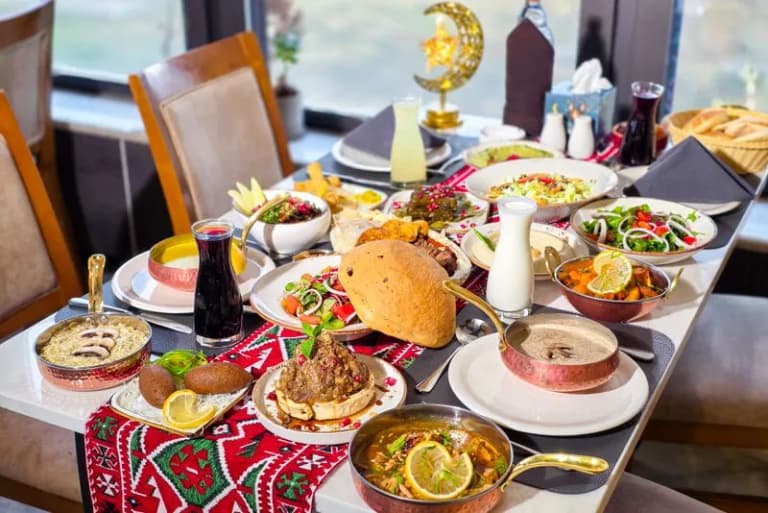
Food is absolutely central to Eid celebrations in Saudi Arabia, with each of the two holidays carrying its own distinct culinary traditions and the resulting feasts being generous, communal, and reliably delicious.
After a full month of fasting, Eid al-Fitr naturally revolves around sweets and breakfast foods, and the tables overflow with traditional favourites like kleicha (date-filled cookies that are the quintessential Eid sweet), ma'amoul (semolina cookies filled with dates, pistachios, or walnuts), sheer khurma (a rich vermicelli pudding made with milk, dates, and nuts), and luqaimat (crispy fried dough balls drizzled with date syrup). Heartier dishes like haneeth (slow-cooked spiced lamb served on rice) feature prominently at the main family meal, and throughout the day every guest who walks through the door is greeted with Arabic coffee and dates, along with platters of baklava and kunafa.
Eid al-Adha revolves around the sacrificial meat, and the freshly prepared lamb or goat becomes the centrepiece of elaborate family meals that can include kabsa (Saudi Arabia's national dish of spiced rice with slow-cooked lamb served on a huge communal platter), mandi (rice and meat cooked in an underground pit, a Yemeni-influenced favourite), haneeth (whole lamb roasted until it falls off the bone), and jareesh (a crushed wheat porridge with meat that is particularly popular in central Saudi Arabia). The first meal after the sacrifice often features mathlouma, a dish prepared from the liver, kidneys, and other offal, and arayes (grilled bread stuffed with spiced minced lamb) are a common accompaniment.
Meals during Eid are typically served on large communal platters placed on the floor, with family members sitting in a circle and eating with their right hand or with a spoon, and the generosity of the portions is genuinely staggering, because there is always far more food than anyone could possibly eat and the leftovers are either sent home with guests or donated to those in need.
Experiencing your first Eid in Saudi Arabia is genuinely one of those unforgettable cultural moments, and a little preparation goes a long way toward making it a positive experience.
Make sure to stock up on groceries a few days before Eid starts, because supermarkets become extremely crowded in the final pre-holiday rush and some smaller shops close for the first day or two of the celebration. Withdraw cash from ATMs early as well, since machines near malls and in busy neighbourhoods frequently run out of notes during the holiday period. If you are planning any travel, book domestic flights and hotels at least two to three weeks in advance, because prices spike dramatically once the Eid dates are confirmed. It is also worth preparing a few small Eidiya envelopes with 10-20 SAR if you have colleagues or neighbours with children, as this small gesture demonstrates cultural awareness and is always warmly received. Finally, check with your employer about the exact holiday schedule, since government and private sector dates sometimes differ.
If a Saudi colleague or neighbour invites you to an Eid gathering, accept the invitation, as it is both a genuine honour and a wonderful cultural experience, and bring along a small gift such as sweets, chocolates, or flowers. Say "Eid Mubarak" to everyone you meet, regardless of your own religion, because it is a universal greeting that is always appreciated. Dress nicely if you are attending any gatherings, as Saudis wear their finest clothes for the occasion and while you do not need traditional dress, smart casual is the expected standard. Be prepared for noise and late-night celebrations, with fireworks, car horns, and children playing in the streets well past midnight all being entirely normal parts of the festive atmosphere. Traffic near malls, parks, and family neighbourhoods will be congested throughout Eid, especially along the Corniche areas in coastal cities, so plan your driving with extra patience.
Avoid eating or drinking visibly in public on the morning of Eid before prayers are completed (approximately 7-8am), do not schedule business meetings or expect any government services to function during the holiday period, and try not to complain about the noise or late-night activity since it is, after all, one of the biggest celebrations of the year. Most importantly, do not overlook your building staff, driver, or other service workers during Eid, because a small Eidiya or even just a warm "Eid Mubarak" means a great deal to the people who support your daily life.
| Category | Status During Eid |
|---|---|
| Malls & shopping centers | Open with extended hours (many until 1-2am). Extremely busy. |
| Restaurants & cafes | Most open, many with special Eid menus. Popular spots need reservations. |
| Supermarkets | Open but may have reduced hours on day 1. Fully open from day 2. |
| Government offices | Closed for the entire holiday period (4-10 days). |
| Banks | Closed during Eid. ATMs available but may run out of cash. Online banking works. |
| Hospitals & pharmacies | Emergency services always open. Clinics may be closed. Major pharmacies open. |
| Entertainment venues | Open with special events. Boulevard Riyadh, Jeddah Season venues are very busy. |
| Public transport | Running but with modified schedules. Ride-hailing apps (Uber, Careem) active but surge pricing. |
| Small shops & local markets | Often closed first 1-2 days, then reopen. Varies by neighborhood. |
Saudi Arabia invests heavily in public Eid celebrations, and every major city organises large-scale events, entertainment programmes, and cultural activities that transform the urban landscape for the duration of the holiday.
The capital goes all out for Eid, with Riyadh Season events (when they overlap with the holiday) featuring international performers, themed entertainment zones, and massive fireworks displays, while Boulevard Riyadh City and Boulevard World host special Eid editions with extended hours. Public parks like King Abdullah Park and Salam Park are decorated and filled with family activities, and the historic Diriyah area frequently hosts cultural performances and food festivals that draw visitors from across the city.
In Jeddah the Corniche becomes the city's primary Eid gathering spot, packed with families, food vendors, and open-air entertainment, while Jeddah Season events bring concerts, shows, and cultural activities to venues across the city. The historic Al-Balad district hosts traditional celebrations with folk music and food stalls winding through the old coral-stone streets, and spectacular fireworks launched over the Red Sea provide a fitting finale to each evening.
Beyond the two largest cities, Dammam and Khobar host Corniche celebrations and family entertainment zones along the Gulf coast, while Abha draws domestic tourists with its cool mountain weather, traditional Asir folk dancing, and outdoor markets. Medina offers a more spiritual Eid experience centered around the Prophet's Mosque with special prayers and gatherings, and AlUla stages heritage-themed celebrations set among its ancient Nabataean tombs and dramatic rock formations.
Keep an eye on the official Saudi Seasons accounts and local municipality social media channels for specific event schedules, which are typically announced one to two weeks before Eid.
Eid al-Fitr 2026 is expected around March 20-21, 2026, depending on the moon sighting. The exact date is confirmed by the Saudi Supreme Court one or two days before, based on the sighting of the Shawwal crescent moon. Eid al-Fitr celebrations typically last 3 days, and public sector holidays can extend to a full week.
Eid al-Adha 2026 is expected around May 27-28, 2026. It falls on the 10th of Dhul Hijjah in the Islamic calendar, coinciding with the Hajj pilgrimage. The holiday lasts 4 days, and combined with weekends, many people get a full week off. Like Eid al-Fitr, the exact date depends on moon sighting and is confirmed by the Saudi Supreme Court.
Most shops, malls, and restaurants are open during Eid - in fact, malls are busier than usual. Large shopping centers extend their hours, and many restaurants offer special Eid menus and promotions. However, on the first day of Eid (especially the morning), many smaller shops and local businesses close for family celebrations and Eid prayers. Supermarkets typically remain open. By the second and third day, everything operates normally or with extended hours.
Eid in Saudi Arabia revolves around family gatherings, feasting, and celebration. People start with Eid prayers at the mosque, then visit relatives (starting with the eldest family members). Children receive money gifts (Eidiya) in decorated envelopes. Families prepare elaborate meals - lamb dishes for Eid al-Adha, sweets and dates for Eid al-Fitr. Public parks, malls, and entertainment venues are packed. Cities organize fireworks, cultural events, and concerts. Many families also travel domestically or internationally during the holiday.
Yes, Eid holidays are mandatory under Saudi labor law. For Eid al-Fitr, employees get a minimum of 4 days off (some employers give a full week). For Eid al-Adha, the minimum is also 4 days. Government employees typically get longer holidays - up to 10 days in some cases. The exact dates are announced by royal decree shortly before each Eid. If your holiday falls on a weekend, you're usually compensated with additional days.
Absolutely - saying 'Eid Mubarak' (Blessed Eid) is welcomed and appreciated regardless of your religion. It's a universal greeting during Eid, similar to saying 'Merry Christmas' in Western countries. You can also say 'Kul aam wa antum bikhair' (May every year find you well), which is used for any holiday. Your Saudi colleagues and neighbors will appreciate the gesture. Many non-Muslim expats also exchange Eid greetings cards and small gifts with their Muslim friends and colleagues.
Eidiya is the tradition of giving money to children during Eid, similar to Chinese New Year red envelopes. In Saudi Arabia, children expect Eidiya from all adults - parents, relatives, family friends, and even neighbors. Amounts vary: 10-50 SAR per child is standard from non-family members, while grandparents and close relatives might give 100-500 SAR. The money is typically placed in small decorated envelopes. If you're an expat, giving Eidiya to your colleagues' children or your building's security guard's kids is a warm gesture that's always appreciated.
It depends on what you want. Eid is a festive, celebratory time with special events, decorations, and a joyful atmosphere in cities. However, it's also peak domestic travel season - hotels, flights, and tourist spots (especially Jeddah's Corniche, Riyadh's Boulevard, and Abha) are extremely crowded and prices spike. Many government offices and businesses operate on reduced hours. If you want to experience Saudi culture at its most vibrant, Eid is wonderful. If you want a quiet, efficient tourist experience, plan around it.
What changes during Ramadan, rules for non-Muslims, iftar meals, and working hours.
Traditional Saudi dishes, regional cuisines, and the best places to eat.
Culture, religion, society, and everything you need to know about the Kingdom.
Complete expat guide to relocating, visas, housing, and settling in.